Help Sugarcane Laborers Migrants In Desperate Need!
Unknown
0 days Left
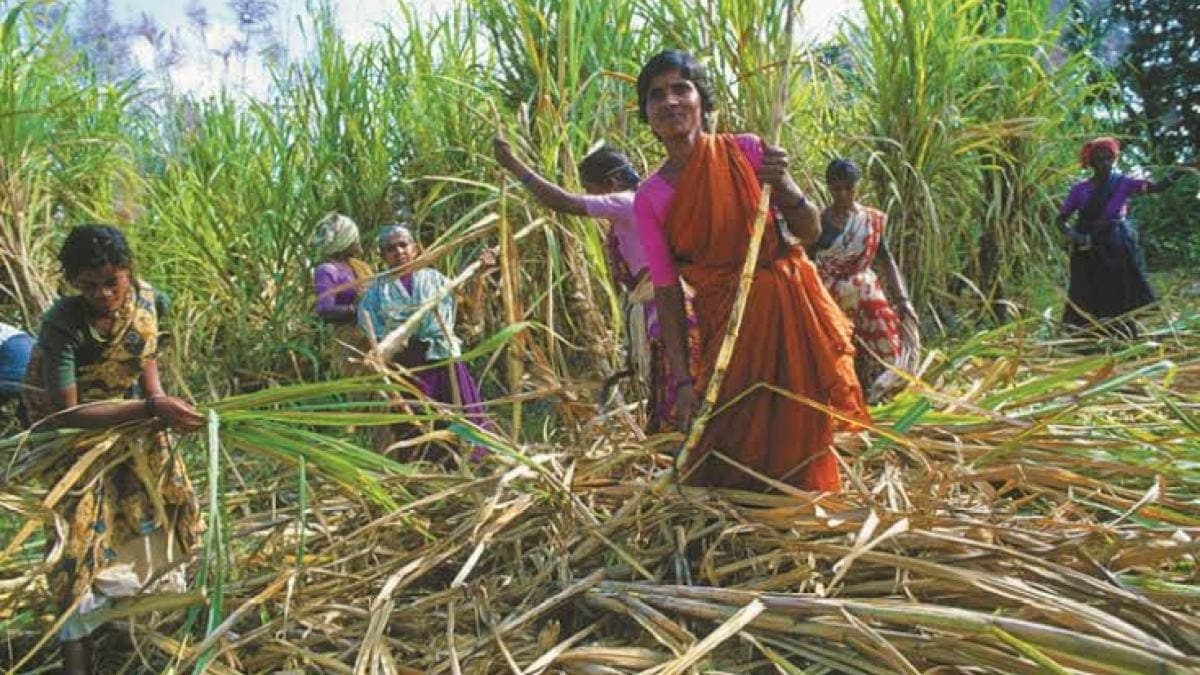
In drought prone Marathwada, migration due to employment problems has a serious impact on the education and upbringing of children here. Rains fluctuating, unreliable rain-fed agriculture, leading to loss of employment opportunities locally. Due to this, a large number of people from Marathwada migrated seasonally. There is a large class going to work mainly on cane and brick kiln. After the Dussehra festival in October, migrant workers leave for Western Maharashtra, Gujarat and Karnataka to cut sugarcane. This migration is so great that villages get wet during this period. In Beed and Osmanabad districts, the picture is more acute. This is the main way of earning a living for the people of Beed, Osmanabad, Latur districts, villages and hamlets at the head and foot of Balaghat.
This migration is causing many problems for the whole stomach. Many generations of these workers were ruined. Many crows were killed. It is easy to try to prevent this migration by creating employment opportunities locally in the low rainfall and adverse conditions here but the future of the next generation can be secured by providing education and upbringing facilities. The issues of malnutrition, child marriage, child labor, child mortality, sexual abuse, out-of-school children can be answered. What is needed is not only political capital but also political will to solve the problem honestly.
14 to 15 lakh people go for carpentry every year. Of these, 3.5 to 4 lakh people migrate seasonally from Beed district to Western Maharashtra and other states for sugarcane harvesting. During the six to eight months of the year, these workers go to the factory with their families for carpentry. There is no arrangement for keeping children in the village for upbringing and education as they go from village to village in Beed district for this work. As a result, about 60,000 children in the age group of 6 to 18 go from Beed district alone with their parents to the sugarcane fields. Considering the total Marathwada, this number is more than 80 thousand.
As a result, 80,000 children in Marathwada are deprived of education due to sugarcane harvesting. They do not get the right to education as they are out of school. As our government has passed the Right to Education Act, it is the responsibility of the government to provide education to the deprived children. It is the duty of the government to bring these children into the stream of education and it has been accepted by the government.
The death toll is 40,000 per year. In addition, hundreds of children are orphaned every year due to the death of their parents in various accidents, while many children also die in the above accidents. The industry works to keep 2.5 lakh children away from the stream of education every year. What is special is that even though this is a dangerous industry that creates so many problems, even a simple record of the workers working in this industry is not in the labor office nor in the factory office. Disadvantages of education
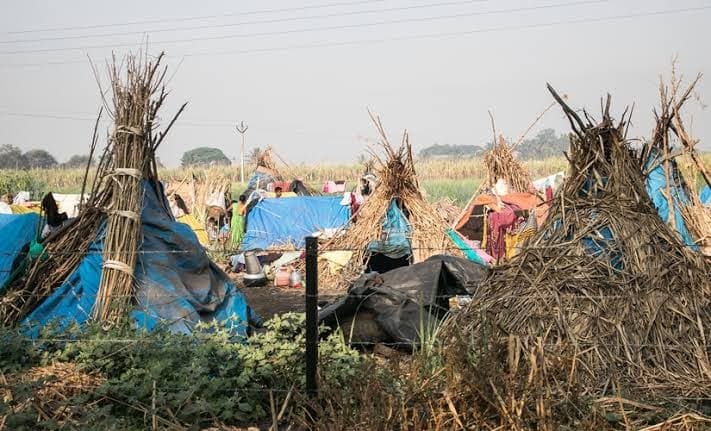
The sugarcane Cutters go to the factory with their oxen, animals and wives. His Bihad is with him. We surveyed more than 50 such migrants habitat in Kolhapur, Sangli and Satara districts. Though we know that we alone could not able to address this issue, but we planed to provide them some help like winter clothes for children, solar lantern, blankets, tarpoline, temporary portable bathrooms etc. Your small help could able to ease their sufferings in a small extent.

19%
funded in
0 days
0 days
$3,608 Raised of $19,800
View Donation
Migrants Laborers
Relationship
No donations yet
Be the first one to donate!
In drought prone Marathwada, migration due to employment problems has a serious impact on the education and upbringing of children here. Rains fluctuating, unreliable rain-fed agriculture, leading to loss of employment opportunities locally. Due to this, a large number of people from Marathwada migrated seasonally. There is a large class going to work mainly on cane and brick kiln. After the Dussehra festival in October, migrant workers leave for Western Maharashtra, Gujarat and Karnataka to cut sugarcane. This migration is so great that villages get wet during this period. In Beed and Osmanabad districts, the picture is more acute. This is the main way of earning a living for the people of Beed, Osmanabad, Latur districts, villages and hamlets at the head and foot of Balaghat.
This migration is causing many problems for the whole stomach. Many generations of these workers were ruined. Many crows were killed. It is easy to try to prevent this migration by creating employment opportunities locally in the low rainfall and adverse conditions here but the future of the next generation can be secured by providing education and upbringing facilities. The issues of malnutrition, child marriage, child labor, child mortality, sexual abuse, out-of-school children can be answered. What is needed is not only political capital but also political will to solve the problem honestly.
14 to 15 lakh people go for carpentry every year. Of these, 3.5 to 4 lakh people migrate seasonally from Beed district to Western Maharashtra and other states for sugarcane harvesting. During the six to eight months of the year, these workers go to the factory with their families for carpentry. There is no arrangement for keeping children in the village for upbringing and education as they go from village to village in Beed district for this work. As a result, about 60,000 children in the age group of 6 to 18 go from Beed district alone with their parents to the sugarcane fields. Considering the total Marathwada, this number is more than 80 thousand.
As a result, 80,000 children in Marathwada are deprived of education due to sugarcane harvesting. They do not get the right to education as they are out of school. As our government has passed the Right to Education Act, it is the responsibility of the government to provide education to the deprived children. It is the duty of the government to bring these children into the stream of education and it has been accepted by the government.
The death toll is 40,000 per year. In addition, hundreds of children are orphaned every year due to the death of their parents in various accidents, while many children also die in the above accidents. The industry works to keep 2.5 lakh children away from the stream of education every year. What is special is that even though this is a dangerous industry that creates so many problems, even a simple record of the workers working in this industry is not in the labor office nor in the factory office. Disadvantages of education
The sugarcane Cutters go to the factory with their oxen, animals and wives. His Bihad is with him. We surveyed more than 50 such migrants habitat in Kolhapur, Sangli and Satara districts. Though we know that we alone could not able to address this issue, but we planed to provide them some help like winter clothes for children, solar lantern, blankets, tarpoline, temporary portable bathrooms etc. Your small help could able to ease their sufferings in a small extent.